From Command to the Boardroom: Navigating the Next Chapter in Military Executive Leadership
As the Pentagon moves to reduce general and flag officer positions by 20%, senior military leaders face a changing landscape. Here's how to prepare strategically for executive opportunities beyond military service.
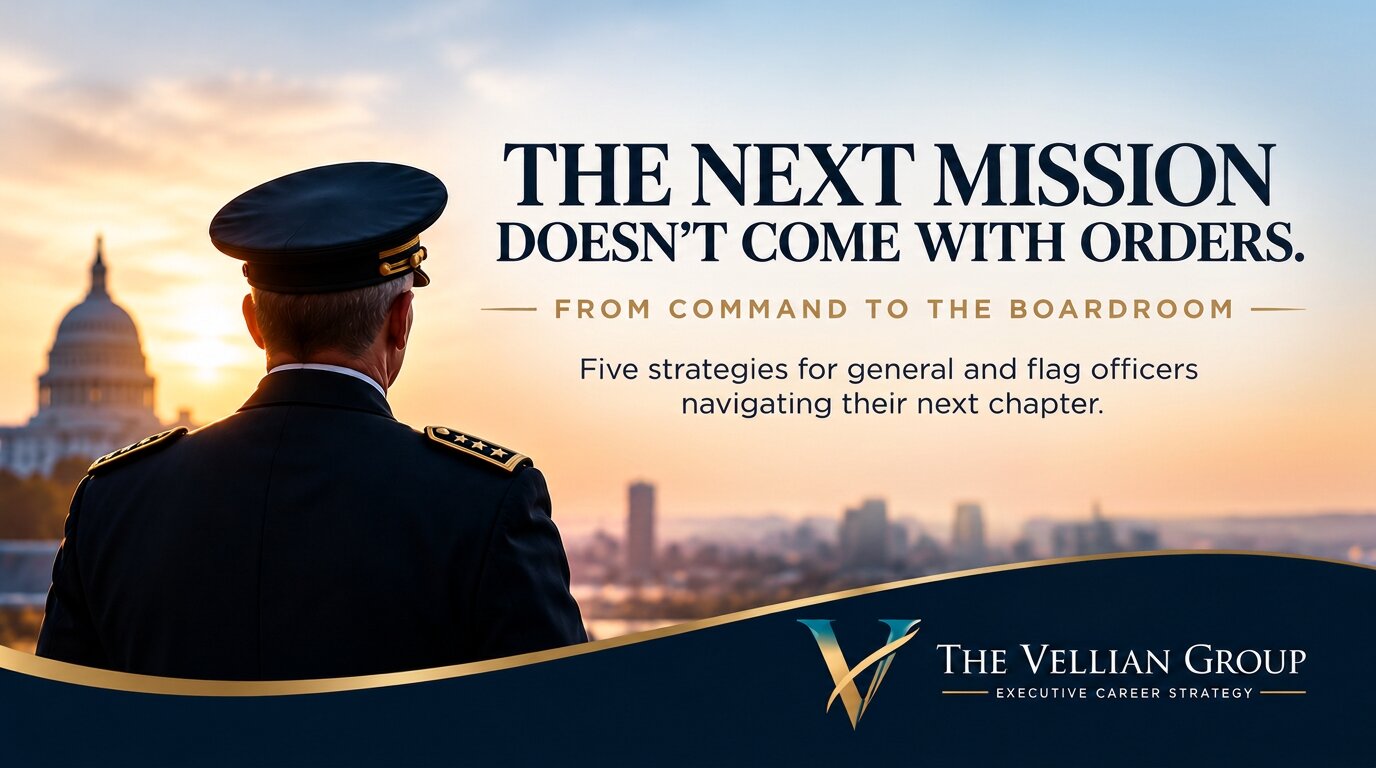
Your Position May Change. Your Leadership Value Doesn't.
For generals, admirals, and senior military leaders, a distinguished career represents decades of service, sacrifice, strategic decision-making, and responsibility for people, resources, and missions of extraordinary importance.
But what happens when the next chapter arrives sooner than anticipated?
In September 2026, the Pentagon confirmed plans to reduce general and flag officer positions by 20%, with the military services directed to complete the reductions by January 1, 2027.
The 20% figure is a total that includes the 10% reduction ordered in 2025, and it applies to general and flag officer positions, not to the armed forces as a whole. Some positions will be eliminated, while others are expected to be downgraded to colonel or Navy captain billets. While the precise career implications will vary, the announcement reinforces an important reality: even the most accomplished leaders must prepare for organizational change.
For those considering retirement, civilian executive leadership, consulting, or corporate board opportunities, this is a time for strategic preparation.
Your military career has established your leadership credentials. Your next challenge is communicating their value to a different audience.
The Challenge Isn't Your Experience. It's How You Communicate It.
I've had the privilege of working with senior military leaders whose careers encompass national security, global operations, cybersecurity, technology, organizational transformation, and complex strategic partnerships.
One challenge I've seen repeatedly is that military accomplishments don't always translate naturally into the language of civilian business.
A corporate CEO may not fully understand the organizational complexity behind a combatant command, a joint operational assignment, or a major defense modernization initiative.
An executive recruiter may recognize the prestige of a military rank without understanding the scope of financial oversight, operational leadership, or organizational transformation involved.
And a corporate board may be looking for expertise in enterprise risk, cybersecurity, governance, or geopolitical strategy without immediately recognizing how closely those needs align with military leadership experience.
This creates a communication challenge, not necessarily a qualification gap.
A military biography tells people where you've served. An executive career strategy explains what you can do for them.
That distinction matters.
Five Strategies for a Successful General or Flag Officer Career Transition
1. Translate Command Experience into Executive Business Value
Military leaders often oversee responsibilities comparable in complexity to those of senior corporate executives.
Depending on the assignment, these may include:
- Enterprise strategy and organizational leadership
- Multibillion-dollar resource and budget oversight
- Global operations and multinational partnerships
- Cybersecurity, technology, and digital transformation
- Enterprise risk management and operational resilience
- Workforce leadership, succession planning, and talent development
- Strategic planning and crisis management
The key is connecting those responsibilities to business outcomes.
Rather than relying on military terminology, explain the scope of your leadership, the challenges you addressed, the decisions you made, and the measurable results achieved.
Civilian decision-makers need to understand not only what you were responsible for, but why that experience is relevant to their organizations.
2. Build an Executive Resume, Not a Civilian Version of Your Military Biography
A military biography serves a different purpose from an executive resume.
Military biographies establish career history, assignments, education, promotions, and professional recognition.
An executive resume is a targeted marketing document.
It should communicate:
- Your executive value proposition
- Your most relevant leadership capabilities
- The scale and complexity of your responsibilities
- Your measurable organizational impact
- Your alignment with a prospective employer's strategic priorities
It should also use ATS-compliant formatting and relevant terminology aligned with the civilian roles you're pursuing.
The objective isn't to diminish military accomplishments. It's to translate them into a language that resonates with executive recruiters, corporate boards, and hiring decision-makers.
3. Position Your LinkedIn Profile for the Leadership Roles You Want Next
Your military rank may carry significant recognition within defense and government circles.
Outside those communities, however, your rank alone may not communicate your full executive capabilities.
A strategically developed LinkedIn profile should reflect your leadership expertise and future direction.
For example, a senior military leader with experience in cybersecurity, global operations, and technology modernization may benefit from positioning that highlights:
Enterprise Leadership | Cybersecurity & Technology Oversight | Global Operations | Strategic Transformation
The right positioning depends on your actual experience and target opportunities.
LinkedIn should help decision-makers understand your value before the first conversation takes place.
It should also support professional networking, relationship development, and visibility among executive search professionals.
4. Prepare for a Different Kind of Executive Interview
Military leaders are accustomed to communicating in environments where authority, structure, and mission clarity are established.
Civilian executive interviews can require a different approach.
Hiring executives want to understand how your leadership experience will help solve their organization's challenges.
They may be evaluating your ability to:
- Lead organizational transformation
- Strengthen operational performance
- Navigate geopolitical and enterprise risk
- Develop high-performing leadership teams
- Oversee complex technology initiatives
- Build partnerships and influence stakeholders
- Deliver measurable business outcomes
At The Vellian Group, I emphasize an others-focused interview philosophy.
They aren't simply interested in what you've accomplished. They want to understand what you can accomplish for them.
This means asking thoughtful questions, listening carefully, and connecting your experience to the organization's priorities.
The strongest interview isn't necessarily the one where you talk the most.
It's the one where the interviewer leaves confident that you understand their challenges and can help address them.
5. Approach Board and Advisory Opportunities Strategically
For some retiring general and flag officers, corporate board service, executive advisory work, or consulting may represent a compelling next chapter.
But distinguished military service does not automatically translate into a corporate board appointment.
Boards evaluate candidates based on the strategic expertise they bring to governance and oversight.
Relevant areas may include:
- Enterprise risk and organizational resilience
- Cybersecurity and technology governance
- Geopolitical strategy and international operations
- Crisis management
- Strategic partnerships
- Organizational transformation
- Leadership succession and talent oversight
A board-focused executive biography should communicate these capabilities through a governance lens rather than simply presenting a chronological military career.
Leaders should also evaluate applicable post-government employment restrictions, ethics requirements, and potential conflicts of interest before pursuing certain opportunities.
Why Executive Career Transition Requires More Than a Resume
One of the most common mistakes accomplished professionals make is assuming their experience will speak for itself.
It rarely does.
Even exceptional leadership backgrounds require thoughtful positioning, particularly when transitioning between industries or organizational cultures.
Career strategy is chess, not checkers.
Your executive resume, LinkedIn profile, professional biography, networking strategy, and interview preparation should work together.
Each element has a purpose.
And each should reinforce a consistent message about the leadership value you bring to your next organization.
For senior military leaders, this process should begin before retirement or separation whenever possible.
Early preparation creates time to explore opportunities, develop professional relationships, evaluate career directions, and communicate your experience effectively.
Your Next Mission: Executive Leadership
A changing military leadership structure may influence the timing of your next professional chapter.
But it does not erase the experience, judgment, or leadership capabilities developed throughout your career.
The organizations that need your expertise may operate in different industries, use different terminology, and measure success differently.
Your opportunity is to help them recognize the connection between what you've accomplished and what they need to achieve.
From Command to the Boardroom, your next chapter deserves a strategy.
How The Vellian Group Supports Senior Military Leaders
The Vellian Group provides personalized executive career marketing and transition strategy for generals, admirals, senior military officers, defense executives, and accomplished professionals pursuing civilian leadership opportunities.
Services include:
- Executive Resume Writing: ATS-compliant resumes that communicate leadership scope, strategic capabilities, and measurable impact.
- Executive Career Strategy: Positioning for corporate leadership, consulting, and career transition opportunities.
- LinkedIn Profile Optimization: Executive branding designed to improve professional visibility and communicate transferable expertise.
- Executive Interview Coaching: Customized preparation, leadership storytelling, and strategic engagement techniques.
- Executive & Board Biographies: Professional positioning for qualified leaders exploring advisory and governance opportunities.
Based in Hillsboro, Oregon, The Vellian Group serves senior leaders nationwide through personalized virtual consulting and coaching.
Your Position May Change. Your Leadership Value Doesn't.
If you're preparing for military retirement, considering an executive career transition, or exploring opportunities beyond uniformed service, I'd welcome a conversation about your next chapter.
Request an Executive Career Strategy Consultation
Learn more about our Military-to-Civilian Executive Transition services.
Heather Joy Hill is the Founder and Executive Career Strategist of The Vellian Group, LLC. Since 2010, she has helped professionals and senior leaders communicate their experience, strengthen their executive brands, and navigate important career transitions.
Source note: For organizations: The Vellian Group also offers customized workshops for military leadership associations and professional networks. Learn about Military Executive Transition Workshops or request a workshop consultation.
The September 2026 announcement concerning general and flag officer reductions was reported by the Military Officers Association of America and the Associated Press. Implementation details may evolve.
Source: Military Officers Association of America — September 30, 2026
Ready for your next step?
Request information or a consultation with The Vellian Group.
Request a ConsultationWant help with your LinkedIn headline?
Leave your name and email — Heather will personally reach out within 1 business day to discuss the best next steps.
All requests are kept strictly confidential. We only use your info to follow up on your request. No spam, ever.
Related articles
More insight on executive career strategy.

Executive Career Coaching in Portland, Oregon: Experience Alone Isn't Enough
Portland has no shortage of experienced professionals. Here's how to make the right experience easier to see, from your resume and LinkedIn to the interview.
Read article →
Outplacement Services That Actually Help: A Cost-Effective Partner for HR Leaders
Layoffs test your culture, your employer brand, and your budget. Here is what modern outplacement services should include, how to evaluate providers, and how The Vellian Group partners with HR leaders to support departing employees with dignity.
Read article →
Senior Leaders: Don't Be Invisible During the Fall Hiring Surge
The September Surge is one of the strongest executive hiring windows of the year. Here is how senior leaders position experience, refresh an executive resume, and optimize a LinkedIn headline before the right opportunity appears.
Read article →