Senior Leaders: Don't Be Invisible During the Fall Hiring Surge
The September Surge is one of the strongest executive hiring windows of the year. Here is how senior leaders position experience, refresh an executive resume, and optimize a LinkedIn headline before the right opportunity appears.

School supplies are back in stores. Vacations are winding down. Calendars are filling up — and organizations are getting back to business.
Late summer and early fall can be an important hiring period as decision-makers return from vacation, organizations refocus on year-end priorities, and hiring activity begins moving again. You may hear recruiters refer to this as the September Surge.
For senior leaders and executives considering a career move, this matters. There can be a valuable window between the end of summer and the holiday slowdown when organizations are filling critical roles and preparing for the year ahead.
You don't want to start getting ready when the opportunity appears. You want to be ready when it does.
Let's talk about the elephant in the interview room: ageism
For experienced professionals, there is another reality we shouldn't ignore: ageism exists.
A 25- or 30-year career should communicate tremendous value. Unfortunately, it can also trigger assumptions you never actually said:
- "Will they be too expensive?"
- "Are they overqualified?"
- "Are they current with AI and emerging technology?"
- "Will they still want to roll up their sleeves?"
- "Will they get bored and leave?"
You can't control every hiring manager's assumptions. But you CAN control the story you give them.
That's where executive branding becomes incredibly important.
Your experience isn't the problem. How that experience is positioned can be.
One of the biggest mistakes we see experienced professionals make is trying to communicate 25+ years of experience by telling employers 25+ years of history.
Those aren't the same thing.
Your executive resume and LinkedIn profile don't need to prove you've been working for a long time. They need to quickly answer the question every employer is ultimately asking:
What can you do for me?
What problems can you solve? What have you transformed, grown, fixed, or saved? What teams have you developed? What difficult situations have you successfully navigated?
And perhaps most importantly: what are you excited to do next?
That's the story employers need to hear.
Don't let a dated resume make you look dated
You can be incredibly current in your thinking and still have a resume or LinkedIn profile that unintentionally tells a different story:
- Long paragraphs
- Twenty-five years of equally weighted work history
- Responsibilities instead of accomplishments
- Outdated terminology
- A generic LinkedIn headline
- An About section that hasn't evolved with your career
- No evidence of current technology, AI, transformation, or digital strategy when those capabilities are relevant to your field
None of those things mean you're outdated. But branding is about perception.
Don't make a recruiter or hiring manager work hard to figure out how relevant you are. Make it obvious.
What should you be doing right now?
Button up your executive resume
Lead with business impact, measurable results, and the challenges you're equipped to solve next.
Your resume doesn't need to be the complete director's cut of your career. It needs to make someone want the next conversation.
Optimize your LinkedIn profile — and pay attention to your headline
Recruiters search LinkedIn using keywords, skills, and job titles. If the language they're searching for isn't reflected in your profile, you can be extraordinarily qualified and still be difficult to find.
One strategy we encourage job seekers to try is updating their LinkedIn headline about once a week. You don't need to reinvent your professional identity every Tuesday — make small, intentional adjustments to the job titles, keywords, and areas of expertise you want to be found for.
Look at several current job descriptions for the positions you actually want. What terminology keeps appearing? What titles are employers using? Which skills, business challenges, and capabilities consistently show up? When they're accurate for your background, work those terms naturally into your headline and throughout your profile.
For example, instead of:
VP of Operations | Experienced Leader
Consider something more searchable and specific:
VP Operations | COO | Enterprise Transformation | Operational Excellence | P&L | Scale & Growth
Think of your LinkedIn headline as searchable real estate — not simply a place to put your current job title.
Don't be invisible. Give recruiters the right words to find you.
Get clear about your executive brand
Your resume and LinkedIn profile shouldn't simply tell people where you've been. They should make it obvious where you're going — and why an organization should want you there.
Your experience isn't your brand. Your brand is the value people associate with your experience.
Start networking now
Reconnect with former colleagues, clients, recruiters, vendors, and industry contacts. Have conversations. Ask questions. Be curious.
Networking works considerably better when every conversation doesn't begin with, "Do you know anyone who's hiring?"
Stop rejecting yourself
Don't meet every qualification? Apply. Think they might want someone younger? Apply. Haven't held that exact title? Apply.
Let them decide you're not the right fit. Don't save the hiring department the trouble by eliminating yourself first.
Use multiple paths to an opportunity
If you see the same job posted through more than one legitimate application channel, don't automatically assume one application means you're done. If there are multiple appropriate ways to get your candidacy in front of the organization, use them strategically. And if you know someone inside the company who can help you get noticed? Even better.
Don't apologize for your experience
You've spent decades building judgment. You've seen strategies work — and fail. You've made difficult decisions, developed people, navigated uncertainty, solved problems, and led organizations through change.
You've learned lessons that can't be downloaded in an afternoon. That's valuable. The challenge is making sure employers can see that value.
For senior leaders, your biggest competition isn't necessarily someone younger. Sometimes it's simply an unclear story.
If your executive resume looks dated, your LinkedIn positioning is generic, your accomplishments are buried beneath responsibilities, or you're struggling to articulate what makes you different, incredible experience can become surprisingly easy to overlook.
That's where branding matters.
Your next adventure
At The Vellian Group, we help senior professionals and executives turn years of experience into a clear, current, and compelling career story through executive resume writing, LinkedIn optimization, personal branding, career strategy, and interview preparation.
If you're considering your next adventure, now is a great time to get your resume, LinkedIn profile, executive brand, and interview strategy buttoned up — before the opportunity you want appears.
And if you'd like someone in your corner to help you do it, we'd love to help.
Don't be invisible. Your experience isn't something to apologize for. It's something to position.
And remember — the best storyteller wins.
Frequently asked questions
What is the September Surge in hiring?
The September Surge refers to the rise in hiring activity that typically follows the summer slowdown, when decision-makers return from vacation, budgets are reviewed, and organizations fill critical roles before year-end. For executives, it often creates a concentrated window of opportunity between Labor Day and the holidays.
How do senior leaders overcome ageism in an executive job search?
Focus on relevance rather than longevity. Lead with recent, measurable business impact, show fluency with current technology and AI where it's relevant, tighten your work history so the last 10-15 years carry the most weight, and make clear what you're excited to do next.
How far back should an executive resume go?
Most executive resumes should detail roughly the last 10-15 years in depth and summarize earlier roles briefly. The goal is relevance and momentum, not a complete career archive.
How often should I update my LinkedIn headline?
Refresh it about once a week with small, intentional keyword adjustments based on the roles you're targeting. Your headline is searchable real estate that directly affects whether recruiters find you.
When should I start preparing for the fall hiring season?
Late summer. Resume writing, LinkedIn optimization, and interview preparation take time to do well, and being ready before roles post is what lets you move quickly when the right one appears.
Ready for your next step?
Request information or a consultation with The Vellian Group.
Request a ConsultationWant help with your LinkedIn headline?
Leave your name and email — Heather will personally reach out within 1 business day to discuss the best next steps.
All requests are kept strictly confidential. We only use your info to follow up on your request. No spam, ever.
Related articles
More insight on executive career strategy.

Executive Career Coaching in Portland, Oregon: Experience Alone Isn't Enough
Portland has no shortage of experienced professionals. Here's how to make the right experience easier to see, from your resume and LinkedIn to the interview.
Read article →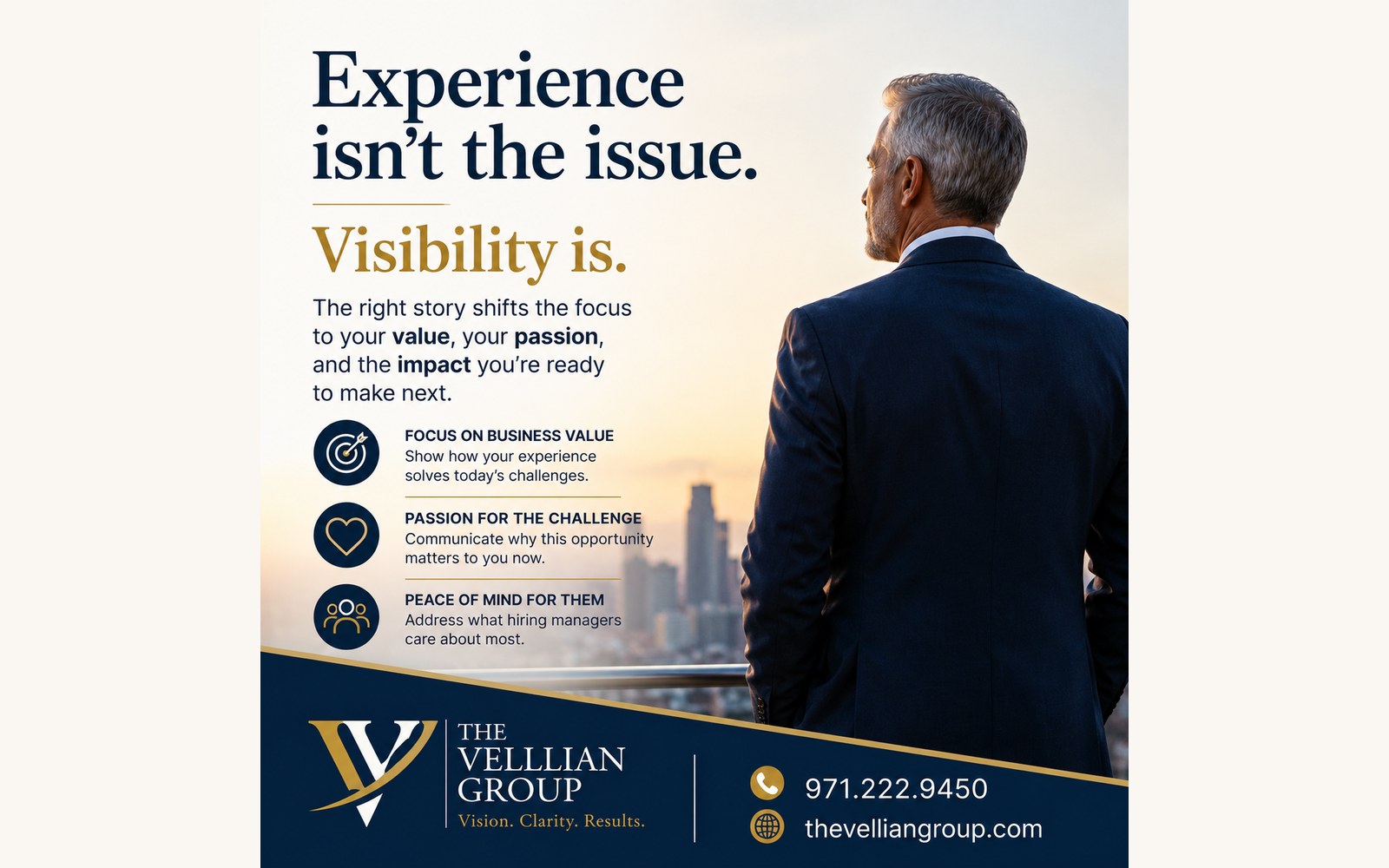
The Invisible Executive: Experience Isn't the Issue, Visibility Is
Senior leaders often feel invisible in today's job market. The problem usually isn't your experience — it's how it's positioned. Here's how to shift the focus to relevance, passion, and business value.
Read article →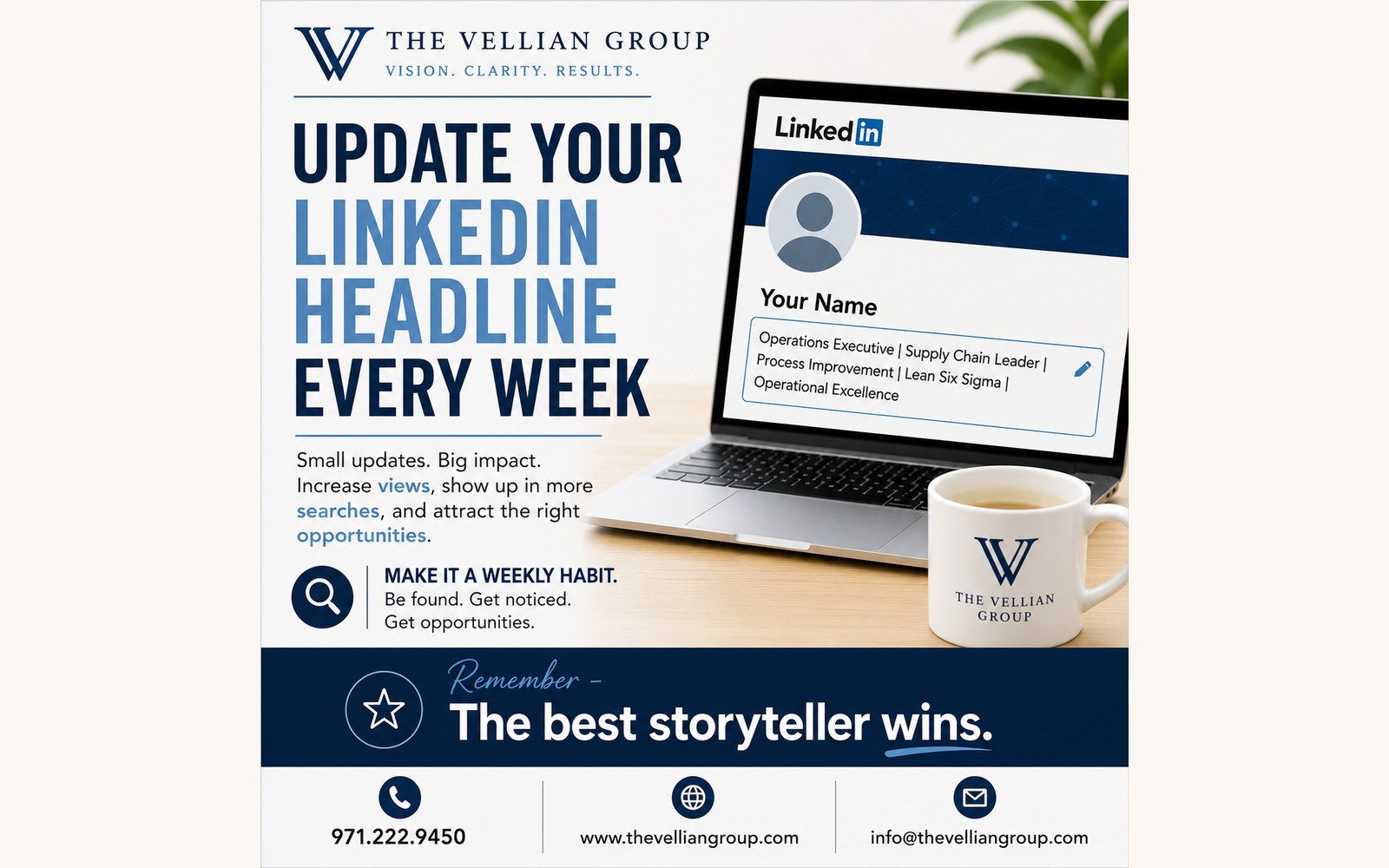
LinkedIn Headline Examples: Update Yours Weekly to Get Found (Executive Job Search Guide)
The best LinkedIn headline isn't written once — it's refreshed every week. Executive-level LinkedIn headline examples, a proven formula, and the weekly job search habit that quietly beats every competitor in the search results.
Read article →